
2026 Updates to California Child Custody Laws: How Judges Decide Parenting Time Now
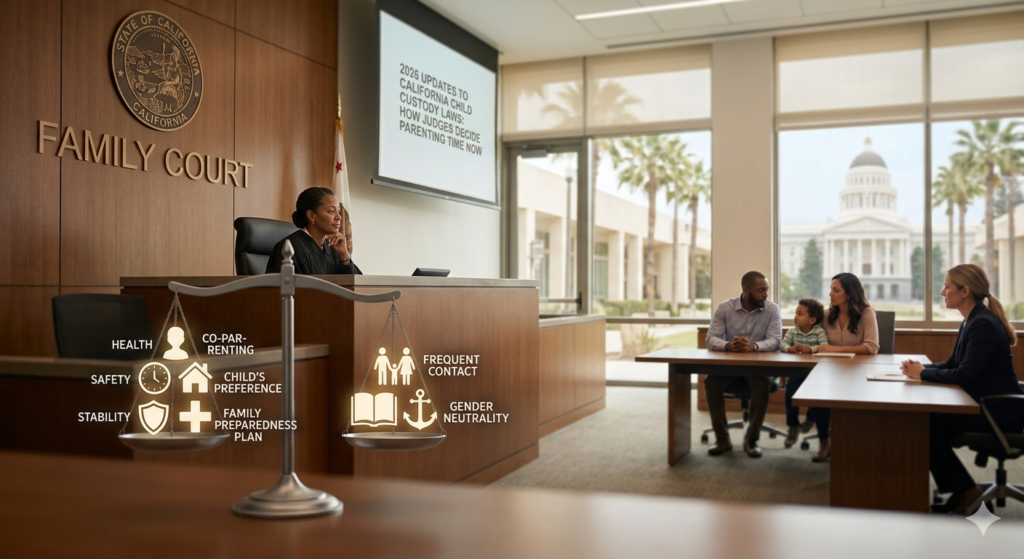
Aggressive Divorce Representation Available NowCall Us (805) 222-6766 Understanding California’s Child Custody Laws In California, the concept of child custody is crucial for families navigating a divorce or separation. Rooted in the principle of “the best interests of the child,” decisions about custody do not presuppose favor towards either the mother or the father. Instead, the courts strive to create arrangements benefiting a child’s overall well-being and development. Legal and physical custody are two distinct types considered by California courts. Legal custody refers to the right to make major decisions about a child’s life, while physical custody pertains to where the child lives. 2026 Changes to California Custody Laws Recent updates in 2026 have brought significant changes to how California judges decide on parenting time and custody arrangements. These changes emphasize equitable parenting plans tailored to meet children’s evolving needs. With a fresh focus on collaborative law, the courts now encourage mutual agreements between parents more vigorously to deliver favorable outcomes that prioritize children’s welfare. These updated guidelines help ensure consistent and fair decisions across Los Angeles County and Ventura County courts. Navigating the Legal Process for Child Custody Cases in California If you seek a child custody arrangement, the legal process in California begins with filing a custody petition in the Superior Court. A certified family law specialist can guide you through the necessary steps, which include: Filing a custody petition in the appropriate court. Serving the other parent with the petition and summons. Participating in mandatory mediation to try to reach a custody agreement. Attending any necessary court hearings if mediation does not result in an agreement. Obtaining a formal court order outlining the custody arrangement. It’s vital to handle each step with care, as missteps, such as failing to provide timely service or negotiate effectively during mediation, can impact the court’s decisions. Parents are encouraged to consult experienced family law attorneys who understand California-specific rules and creative solutions tailored to their family’s needs. Comprehensive Family Law Services Offered The Law Offices of Seth C. Bowen provides a comprehensive range of family law services to meet diverse family needs: Child Custody Children’s Rights and Welfare Child Support Divorce Domestic Violence Fathers’ Rights Grandparents’ Rights Modifying Court Orders Paternity Postnuptial Agreements Whether dealing with a high-conflict custody scenario or seeking to modify a court order, the firm offers personalized, client-centered legal support. The Law Offices of Seth C. Bowen: Expertise in Family Law With a presence rooted in Tarzana, California, the Law Offices of Seth C. Bowen offers profound local insight and expertise in family law cases across Los Angeles County and Ventura County. Seth C. Bowen, backed by an impressive legal education from Loyola Marymount University and Chapman University School of Law, brings depth and understanding to every case. Active in professional legal circles, he is a member of both the San Fernando Valley Bar Association and the Los Angeles County Bar Association, reflecting his commitment to local legal excellence. In recognition of the firm’s dedication, Expertise.com listed the firm among the Best Divorce Lawyers in Ventura in 2022, reinforcing its position as a leading advocate for families. Frequently Asked Questions What are the main factors California courts consider in child custody cases? California courts evaluate several factors based on the “best interests of the child,” such as the child’s age and health, emotional ties to each parent, the parent’s ability to care for the child, and any history of domestic violence or substance abuse. How have the 2026 changes impacted child support calculations? Child support calculations follow the guideline formula updated by Senate Bill 343, effective September 1, 2024. This formula considers parental income, number of children, and time each parent spends with the child, ensuring fair financial support. Can a custody order be modified after it’s issued? Yes, custody orders can be modified if there is a significant change in circumstances affecting the child’s welfare. This modification ensures the custody arrangement continues to serve the child’s best interests. Is mediation mandatory in all custody cases in California? Mediation may be mandatory before a judge hears contested custody matters. This requirement promotes resolutions that align with the child’s best interests while potentially preserving parental relationships. What is the significance of a Preliminary Declaration of Disclosure in a divorce case? The Preliminary Declaration of Disclosure is crucial, as it requires both parties to fully disclose financial information early in the divorce process, ensuring transparency and fairness in asset division. Taking the Next Step If you’re facing child custody or any family law matter, it’s essential to understand your rights and options under California law. The Law Offices of Seth C. Bowen offers a free initial consultation to begin addressing your legal needs. Visit https://sethbowenlaw.com/ for more information and to schedule your consultation. Disclaimer This page is intended for informational purposes only and does not constitute legal advice. Individual situations vary, and you should consult a qualified attorney for advice on your specific situation. Law Offices of Seth C. Bowen 19318 Ventura Boulevard, Suite 102 Tarzana, CA 91356 (805) 222-6766
What to Do If Your Spouse Hides Assets During a California Divorce

Aggressive Divorce Representation Available NowCall Us (805) 222-6766 What to Do If Your Spouse Hides Assets During a California Divorce Understanding Hidden Assets in California Divorces Navigating a divorce in California can be complex, particularly when one spouse is hiding assets. This practice undermines the fundamental fairness of asset division in a community property state like California. In Tarzana and across Los Angeles County, families face real challenges when dealing with undisclosed financial matters during divorce proceedings. When you suspect your spouse is concealing assets, it’s imperative to understand how California law can help you address this issue effectively. Legal Standards for Divorce Asset Disclosure in California California’s legal framework emphasizes transparency and fairness in divorce, mandating complete financial disclosure from both parties. As a “no-fault” divorce state, California centers its legal grounds on “irreconcilable differences,” but each spouse must still disclose their assets and debts fully. This ensures equitable distribution of community property—assets and debts acquired during the marriage are typically divided equally, although adjustments can be made for fairness. The Legal Process in California for Addressing Hidden Assets Handling undisclosed assets starts with understanding the mandatory procedures: Preliminary Declaration of Disclosure: Both parties must complete and exchange this declaration, listing all assets, debts, and income. Proof of Service: After serving divorce papers, proof of service must be filed with the court, a crucial step often missed by first-time petitioners. Discovery Process: This phase allows for gathering evidence about the spouse’s finances. Requests for documents, depositions, and subpoenas may be utilized here. Financial Forensic Experts: Employing these specialists can be essential for uncovering hidden assets. Court Review and Judgments: If concealment is proven, the court may adjust the division of assets to ensure fairness or impose legal fees on the deceptive spouse. Mediation, often required for cases involving children, can also facilitate discussions about financial discrepancies before a trial is necessary. The Impact of Hidden Assets on Divorce Settlements Hiding assets can significantly impact divorce settlements. California courts can impose severe penalties on dishonest spouses, including adjustments in property division to rectify financial dishonesty. The court’s priority remains fair outcomes, but undisclosed assets can lead to prolonged legal battles, emphasizing the need for a strategic legal approach from the outset. Family Law and Divorce Services in Tarzana The Law Offices of Seth C. Bowen offers a comprehensive range of family law and divorce services to assist clients in Tarzana and Ventura County: Child Custody Children’s Rights and Welfare Child Support Divorce Domestic Violence Fathers’ Rights Grandparents’ Rights Modifying Court Orders Paternity Postnuptial Agreements Our dedicated legal team is adept at handling the unique challenges of divorce cases, including the discovery of hidden assets, ensuring that every client receives knowledgeable and compassionate legal support. Preventing Mistakes in Divorce Cases Involving Hidden Assets Avoiding pitfalls starts with understanding some common mistakes in these cases: Failure to Engage Experts: Not utilizing financial forensic experts can hinder the discovery of concealed assets. Incomplete Disclosures: Overlooking the Preliminary Declaration of Disclosure can drastically affect the case outcome. Neglecting Legal Advice: Delaying consultation with an experienced family law attorney may reduce the chances of a favorable settlement. Being informed about these issues empowers clients to make better decisions during a divorce. Establishing Our Experience and Local Presence Seth C. Bowen, benefiting from his education at Chapman University and Loyola Marymount University, is deeply familiar with the Los Angeles County and Ventura County legal landscapes. The Law Offices of Seth C. Bowen is committed to providing accessible and personalized legal services, recognized by Expertise.com as one of the Best Divorce Lawyers in Ventura in 2022. Our team actively participates in the San Fernando Valley Bar Association and the Los Angeles County Bar Association, underscoring our dedication to professional excellence and community involvement. FAQs About Hidden Assets and Divorce in California How do I find hidden assets in a California divorce? Engage financial forensic experts and utilize legal discovery tools to uncover hidden assets. Your attorney can guide each step to ensure transparency in the asset division process. What happens if a spouse lies about money in divorce? California courts can alter asset division and impose sanctions against a spouse who conceals assets, potentially requiring them to pay legal fees or facing other penalties in order to ensure equitable arrangements. Can hidden assets change a divorce settlement in California? Yes, finding hidden assets can significantly modify the settlement, leading to a fair division or compensation for previously undisclosed assets. What if I forgot to include an asset in my disclosure? Amend the Preliminary Declaration of Disclosure as soon as possible, with guidance from your legal counsel, to rectify the omission and comply with court requirements. Do I need to file proof of service in a divorce proceeding? Yes, filing proof of service is required to confirm that your spouse is notified of the divorce action, a critical step in the legal process. Seeking Legal Support in Tarzana For practical and personalized solutions to family law matters in Tarzana, contact our experienced team at https://sethbowenlaw.com/. The Law Offices of Seth C. Bowen offers a free initial consultation, focusing on achieving favorable outcomes for families facing divorce and asset division challenges. Click here to learn more and schedule an appointment. Disclaimer This content is for informational purposes only and does not constitute legal advice. Please consult a qualified attorney for advice tailored to your situation. Law Offices of Seth C. Bowen 19318 Ventura Boulevard, Suite 102 Tarzana, CA 91356 (805) 222-6766
What Parents Need to Know About Relocating With a Child in California

Aggressive Divorce Representation Available NowCall Us (805) 222-6766 What Parents Need to Know About Relocating With a Child in California Navigating Family Law in Tarzana, California Living in Tarzana, California, offers residents the charm of a close-knit community with the vibrancy of Los Angeles County at their doorstep. As part of this region, families often face unique challenges, especially when it comes to family law matters like child custody and relocation. Understanding how these issues are handled within the legal framework of California is crucial for parents considering a move. The Law Offices of Seth C. Bowen, located in nearby Tarzana, is well-positioned to assist local families due to its deep-rooted connection with the communities of Los Angeles and Ventura Counties. Understanding Relocation and Child Custody in California California’s legal landscape regarding child custody and relocation is firmly set within a framework that prioritizes the best interests of the child. Parents considering moving with their child must navigate the legal requirements of obtaining a move-away order if the other parent does not consent. As California is a no-fault divorce state, the decision revolves solely around the child’s welfare, with the goal of maintaining stability in their life and protecting their relationship with both parents. Legal Processes for Family Law and Divorce in California The process of handling family law and divorce cases in California can be complex, involving several mandatory steps: Establish residency by living in California for at least six months. File a petition for divorce citing irreconcilable differences as the ground. Serve the divorce papers, ensuring proof of service is filed with the court. Exchange a Preliminary Declaration of Disclosure outlining financial assets. Attend mediation to resolve custody and child support issues if children are involved. If custody is contested, demonstrate arrangements in the child’s best interest. Await the mandatory six-month waiting period from the date of service before finalizing the divorce. A court may issue temporary orders for support and custody during the process. Understanding these steps is crucial for navigating the legal system effectively, and the experienced team at the Law Offices of Seth C. Bowen stands ready to guide clients through every stage. The Range of Family Law Services Offered The Law Offices of Seth C. Bowen provides comprehensive legal support tailored to family law matters, including services such as: Child Custody Children’s Rights and Welfare Child Support Divorce Domestic Violence Fathers’ Rights Grandparents’ Rights Modifying Court Orders Paternity Postnuptial Agreements These services are designed to address a wide array of scenarios families might encounter, ensuring that individuals receive precise and supportive legal guidance. Experience and Local Presence in Los Angeles and Ventura Counties Seth C. Bowen holds degrees from Loyola Marymount University and Chapman University School of Law, two distinguished Southern California institutions. His deep understanding of the local court systems and community needs enables the firm to provide personalized legal services. Active memberships in the San Fernando Valley and Los Angeles County Bar Associations reflect Seth’s commitment to maintaining excellence in his practice. Recognized by Expertise.com as one of the Best Divorce Lawyers in Ventura in 2022, the firm is dedicated to helping families achieve favorable outcomes in their legal cases. FAQs About Moving With a Child in California Can I move out of California with my child after divorce? You must obtain court approval to relocate out of state with your child post-divorce if the other parent opposes the move. What happens if one parent wants to relocate in California? The relocating parent must file for a move-away order, and the court will determine the case based on the child’s best interests. Do I need court approval to move with my child? Yes, court approval is required if the other parent disagrees with the move and both parents share custody rights. How does the court determine whether relocation is in the child’s best interest? The court considers factors including the child’s age, the relationship with both parents, and the impact on the child’s well-being. Is mediation required if there’s a dispute over relocation? Mediation is often encouraged or mandated to resolve disputes concerning child custody and visitation before the court hears the case. Take the Next Step with the Law Offices of Seth C. Bowen If you’re navigating the complexities of family law in California, especially concerning child relocation, the Law Offices of Seth C. Bowen can provide the dedicated support and informed guidance you need. Contact us today for a free initial consultation to explore your options and develop a strategy tailored to your family’s needs. Click here to learn more and schedule an appointment. Disclaimer This content is for informational purposes only and does not constitute legal advice. Each family law case is unique, and individuals should seek advice from a qualified attorney for guidance specific to their situation. Law Offices of Seth C. Bowen 19318 Ventura Boulevard, Suite 102 Tarzana, CA 91356 (805) 222-6766
Temporary vs Long-Term Spousal Support in California: What’s the Difference?

Aggressive Divorce Representation Available NowCall Us (805) 222-6766 Temporary vs Long-Term Spousal Support in California: What’s the Difference? Understanding Spousal Support in California In the vibrant community of Tarzana, part of the Greater Los Angeles area, understanding the nuances of spousal support during divorce can significantly impact your case outcome. Spousal support, known as alimony in other regions, facilitates financial assistance to a spouse post-separation. In California, the distinction between temporary and long-term spousal support is pivotal. Temporary spousal support is awarded to maintain a spouse’s standard of living during divorce proceedings, while long-term spousal support may continue for a longer duration after the divorce is finalized. Temporary Spousal Support in California What is temporary spousal support in California? During a divorce, one spouse might temporarily receive financial support to maintain their standard of living until a final agreement is reached or a court ruling is made. This type of support ensures that day-to-day living costs are manageable during the transition. Calculations for this support use local guidelines to determine a fair amount, ensuring both parties can handle their immediate needs. Long-Term Spousal Support Explained Long-term spousal support begins once the divorce is finalized and the court considers several factors to determine its necessity. These factors include the duration of the marriage, the lifestyle during the marriage, each spouse’s earning capacity, and the contributions to household and career building. In cases where the marriage lasted over ten years, the court might award long-term support, which is subject to modification and is not necessarily indefinite. How Family Law and Divorce Cases Work in California California’s no-fault divorce policy allows couples to separate due to irreconcilable differences without assigning blame. Once divorce papers are served, a six-month waiting period begins, which is mandatory before finalizing the divorce. During this period, both parties must file and exchange a Preliminary Declaration of Disclosure, detailing all financial aspects. Most assets and debts acquired during the marriage are divided equally, adhering to California’s community property laws. Step-by-Step Legal Process for Divorce in California Navigating your divorce can be straightforward with the right guide. Here’s a typical roadmap: File the Divorce Petition: Initiate the divorce by filing and serving papers, ensuring proof of service is filed with the court. Financial Disclosures: Exchange Preliminary Declaration of Disclosure to provide detailed financial information to each other. Temporary Orders Hearing: Request temporary orders for spousal or child support if necessary. Discovery Process: Engage in discovery to gather all relevant financial and personal information, if required. Mediation: Attend mediation sessions, particularly for contested custody matters, to reach mutual agreements where possible. Trial or Settlement: If mediation fails, the case may go to trial. Settlements can avoid a trial if both parties agree. Finalize the Divorce: After the six-month waiting period and resolving all issues, the court finalizes the divorce. Family Law and Divorce Services Offered in Tarzana At the Law Offices of Seth C. Bowen, comprehensive family law services are delivered with a focus on our clients’ needs: Child Custody Children’s Rights and Welfare Child Support Divorce Domestic Violence Fathers’ Rights Grandparents’ Rights Modifying Court Orders Paternity Postnuptial Agreements Our team is dedicated to delivering practical, personalized solutions for each client. The Firm’s Experience and Local Presence Based in Tarzana, the Law Offices of Seth C. Bowen extends its extensive experience across Los Angeles County and Ventura County. Seth C. Bowen, an alumnus of Loyola Marymount University and Chapman University School of Law, is deeply connected to the local community and court systems. The firm values accessible, personalized legal services, complemented by its recognition as one of the Best Divorce Lawyers in Ventura 2022 by Expertise.com. Active memberships with the San Fernando Valley Bar Association and Los Angeles County Bar Association showcase Seth’s commitment to exceptional legal practice. FAQs about Spousal Support in California How is spousal support calculated in California? Spousal support calculations consider several factors, including the length of the marriage, the standard of living, each party’s income, needs, and the ability to pay while ensuring fair and reasonable support. What is temporary spousal support in California? Temporary spousal support is provided during divorce proceedings to help a spouse maintain their standard of living until the divorce is finalized or settled. When does spousal support end in California? Spousal support typically ends on a date ordered by the court or agreed upon in a settlement. For long-term marriages over ten years, support may endure until a court decides otherwise. Can spousal support orders be modified? Yes, if there is a significant change in circumstances, spousal support orders can be modified by applying through the court. Is mediation required in California divorce cases? Yes, especially for contested child custody and visitation cases, mediation is a necessary step before proceeding to a court hearing. Take the Next Step Toward Resolution If you’re considering divorce or grappling with family law issues in Tarzana or surrounding areas, reach out to the Law Offices of Seth C. Bowen. Benefit from a free initial consultation to discuss your situation and options with our dedicated team of legal professionals. Click here to learn more and schedule an appointment. Disclaimer This content is for informational purposes only and does not constitute legal advice. For advice tailored to your specific situation, please consult a qualified attorney. Law Offices of Seth C. Bowen 19318 Ventura Boulevard, Suite 102 Tarzana, CA 91356 (805) 222-6766
How to File for Divorce in California: Step-by-Step Guide for First-Time Petitioners

Aggressive Divorce Representation Available NowCall Us (805) 222-6766 How to File for Divorce in California: Step-by-Step Guide for First-Time Petitioners Finding Your Way Through Divorce in Tarzana, California Filing for divorce can be an overwhelming process. Understanding how divorce works in California and what you need to do can make this difficult journey a bit more navigable. Residents of Tarzana, nestled in Los Angeles County, can expect their divorce proceedings to follow specific state guidelines. Whether you live near Ventura Boulevard or elsewhere in Tarzana, knowing the process can help manage your expectations. Understanding the California Divorce Process California practices no-fault divorce, meaning you don’t have to prove any wrongdoing by your spouse to file. The main grounds for divorce is “irreconcilable differences,” which simplifies the divorce process. California is also a community property state, meaning most assets and debts acquired during the marriage are split equally unless a prenuptial agreement states otherwise. In matters involving children, such as custody and support, the court follows the “best interest of the child” standard. This prioritizes the child’s health, safety, and welfare above all else. Step-by-Step Guide to Filing for Divorce in California Knowing the steps involved can ease the stress of the divorce process. Here’s what first-time petitioners need to do: Prepare Your Petition: Start by completing forms such as the Petition (FL-100) and Summons (FL-110). Annulments or legal separations require different paperwork. File Your Papers: Submit these forms with the local court. There may be a filing fee unless you qualify for a fee waiver. Serve Your Spouse: Legally notify your spouse by delivering copies of your filed papers to them. Ensure that proof of service is filed with the court. Exchange Financial Disclosures: Both parties must complete and exchange a Preliminary Declaration of Disclosure, outlining all assets and debts. Waiting Period: California Law mandates a minimum six-month waiting period from the date of service of the divorce papers before the divorce can be finalized. Settlement or Court: If both parties agree on terms, you can file a Stipulated Judgment. If not, a judge will resolve issues following hearings. Family Law Services Offered by Our Firm The Law Offices of Seth C. Bowen provides comprehensive services in Family Law and Divorce, including: Child Custody Children’s Rights and Welfare Child Support Divorce Domestic Violence Fathers’ Rights Grandparents’ Rights Modifying Court Orders Paternity Postnuptial Agreements With a client-centered approach, our team is ready to guide you through these complex legal matters. Tailoring Legal Guidance to Tarzana’s Community With educational roots at Loyola Marymount University and a law degree from Chapman University School of Law, Seth C. Bowen brings a profound understanding of Tarzana’s community and its legal landscape. This local expertise is crucial in addressing the diverse needs of families in Los Angeles County and Ventura County, especially when navigating the nuanced realms of family law. Your Family’s Needs in Los Angeles County and Ventura County Recognizing that each client’s situation is unique, our law firm is committed to practical and personalized solutions. From our office on Ventura Boulevard, the Law Offices of Seth C. Bowen offer insight, experience, and compassionate representation. We understand that legal challenges involving domestic violence, custody disputes, or property division require sensitive handling and strategic planning. FAQs About Filing for Divorce in California How do I file for divorce in California? Start by filling out and filing the required forms in your local county courthouse, serving them to your spouse, and fulfilling all disclosure obligations. What forms do I need to start a divorce in California? Essential forms include the Petition (FL-100), Summons (FL-110), and financial disclosures. Additional forms may be needed based on your unique case. How long does it take to file for divorce in California? While the initial filing can be completed in days, California law requires a minimum six-month waiting period from the date of service of the divorce papers before your divorce can be finalized. What’s the difference between legal and physical custody? Legal custody involves decision-making authority for a child’s welfare, while physical custody concerns where and with whom the child lives. Can an existing custody or support order be modified? Yes, modifications can occur with a showing of significant change in circumstances since the original order was established. Act Now To Secure Your Family’s Future Proactive legal guidance can make a significant difference during a divorce. To discuss your situation and see how we can assist you, reach out to the Law Offices of Seth C. Bowen for a free consultation. Start making informed decisions today. Click here to learn more and schedule an appointment and ensure your rights are protected through this pivotal process. Disclaimer The content provided here is for informational purposes only and does not constitute legal advice. Consult with a qualified attorney to address your specific legal situation. Law Offices of Seth C. Bowen 19318 Ventura Boulevard, Suite 102 Tarzana, CA 91356 (805) 222-6766
How to Change a Custody Order in California After Divorce

Aggressive Divorce Representation Available NowCall Us (805) 222-6766 How to Change a Custody Order in California After Divorce Modifying Custody Orders in Tarzana, California For many families in Tarzana, located amidst the vibrant neighborhoods of Los Angeles County, life after divorce can come with its challenges. Changing a child custody order is one of those difficult tasks that many parents face as time and circumstances evolve. California, being a no-fault divorce state, ensures that the best interests of the child remain at the forefront of any custody decision. Understanding Family Law and Divorce in California California family law takes a distinctive approach to divorce and child custody. As a community property state, assets and debts acquired during a marriage are generally split equally. However, one of the crucial aspects of family law in California is the emphasis on child welfare. Whether it’s a matter of custody, support, or visitation, the court focuses on the child’s best interests, considering factors like health, safety, and welfare. The Legal Process for Modifying a Custody Order If you’re seeking to modify a custody order in California, understanding the legal landscape is essential. Here’s a step-by-step guide on how the process typically unfolds: Determine Need: Identify the significant change in circumstances that necessitates modifying the existing custody order. Consult an Attorney: It’s advisable to seek guidance from an experienced family law attorney. The Law Offices of Seth C. Bowen offers a free initial consultation, which can be beneficial. File the Request: Submit a formal request to the California Superior Court for the modification of the custody order. Serve Papers: Ensure the other parent receives official notice of your request. This step is crucial for the legal process. Mediation Session: In California, mediation is usually required before a judge will address a contested custody issue. Court Hearing: If mediation doesn’t resolve the matter, a court hearing will be scheduled. The court will evaluate the change in circumstances and make a decision based on the child’s best interests. Implementing the Order: Once modified, ensure all involved parties comply with the new custody arrangements. Services Offered by the Law Offices of Seth C. Bowen The Law Offices of Seth C. Bowen, situated conveniently on Ventura Boulevard in Tarzana, provides comprehensive family law services: Child Custody Children’s Rights and Welfare Child Support Divorce Domestic Violence Fathers’ Rights Grandparents’ Rights Modifying Court Orders Paternity Postnuptial Agreements The firm brings a client-centered approach, addressing diverse needs of families across Los Angeles County and Ventura County. The Law Offices of Seth C. Bowen’s Local Commitment With a foundation in Southern California law, Seth C. Bowen’s education from Chapman University School of Law and Loyola Marymount University uniquely positions the firm to serve the communities of Los Angeles and Ventura Counties. The recognition by Expertise.com as one of the Best Divorce Lawyers in Ventura in 2022 stands as testimony to the firm’s dedication and success in family law. Being active members of the San Fernando Valley Bar Association and the Los Angeles County Bar Association further marks the firm’s local influence and expertise. Frequently Asked Questions Can I change custody after a California divorce? Yes, you can request a custody modification in California if there has been a significant change in circumstances affecting the child’s best interests. What do I need to modify a custody order in California? You need proof of a significant change in circumstances since the original order was made to justify the modification request. How hard is it to change custody in California? Changing custody in California requires demonstrating a substantial change in circumstances. It involves mediation and potentially a court hearing. Are both physical and legal custody modifiable? Yes, both types of custody can be modified if a significant change affects the child’s best interests. Is mediation required for changing custody in California? Yes, mediation is generally required before a court will hear a contested custody issue. Seek Legal Help from Trusted Specialists If you’re considering a custody modification and need experienced legal guidance, the Law Offices of Seth C. Bowen are here to help. With a free initial consultation, you can explore your legal options. Click here to learn more and schedule an appointment. Disclaimer This content is intended for informational purposes only and does not constitute legal advice. For advice specific to your individual situation, consult a qualified attorney. Law Offices of Seth C. Bowen 19318 Ventura Boulevard, Suite 102 Tarzana, CA 91356 (805) 222-6766
How Long Does a Divorce Take in California? Timeline, Delays, and the 6-Month Waiting Period

Aggressive Divorce Representation Available NowCall Us (805) 222-6766 How Long Does a Divorce Take in California? Timeline, Delays, and the 6-Month Waiting Period Understanding Divorce Timelines in California How long does divorce take in California? This is a common question for many spouses considering separation in Tarzana, California. The answer can vary significantly based on several factors, including whether the divorce is contested or uncontested, how well both parties cooperate, and the specific issues that must be resolved. California’s legal process generally mandates a minimum of six months from the date the divorce petition is served before a divorce can be finalized, emphasizing the need for patience and careful planning. California Divorce Process Explained For those navigating a divorce in California, understanding the process is crucial. California operates under a no-fault divorce principle, allowing spouses to cite “irreconcilable differences” without proving wrongdoing. Here’s a step-by-step process you can expect: Filing the Petition: One spouse files a divorce petition with the court. Serving the Petition: The petition must be served to the other spouse, with a proof of service filed with the court. Response: The other spouse has 30 days to file a response once served. Preliminary Declaration of Disclosure: Both parties must complete and exchange this mandatory financial disclosure. Temporary Orders: Either party can request temporary orders for issues like child support or custody, which are important during the divorce process. 6-Month Waiting Period: This state-required period must pass before a divorce can be finalized. Mediation or Settlement: Couples may use mediation to agree on key issues, which can expedite the process. Trial: If no agreement is reached, a trial will determine unresolved issues. Final Judgment: The court issues a final divorce decree once all matters are resolved. Key Factors Influencing Divorce Duration Several factors can affect the California divorce timeline: Complexity of Issues: Child custody and property division can complicate proceedings. Cooperation Level: Couples who agree on terms typically finalize their divorce quicker. Court Backlogs: Caseloads can delay hearings and final judgments. Legal Representation: Experienced attorneys can help navigate the process more efficiently, minimizing common errors. Why Does California Have a 6-Month Waiting Period? Many wonder, “Why does California have a 6-month waiting period?” This waiting period serves as a “cooling-off” time, allowing spouses to reconsider their decision and seek reconciliation, underscoring the state’s policy to promote thoughtful decision-making in marital dissolution. Sub Services Offered by the Law Offices of Seth C. Bowen The Law Offices of Seth C. Bowen provides a comprehensive range of family law services tailored to fit the needs of individuals and families in Los Angeles and Ventura County. These services include: Child Custody Children’s Rights and Welfare Child Support Divorce Domestic Violence Fathers’ Rights Grandparents’ Rights Modifying Court Orders Paternity Postnuptial Agreements The Expertise of the Law Offices of Seth C. Bowen The Law Offices of Seth C. Bowen offers profound legal knowledge rooted in Southern California’s legal landscape. Seth C. Bowen, educated at Loyola Marymount University and Chapman University School of Law, and his team provide an accessible, personalized approach to family law issues. Recognized by Expertise.com as one of the Best Divorce Lawyers in Ventura in 2022, the firm is committed to helping families navigate complex legal challenges in Los Angeles County and Ventura County. Common Questions About Divorce in California How long does a divorce take in California from start to finish? While the mandatory waiting period is six months, the complete process can take longer depending on the complexity of the case and local court schedules. What delays a divorce case in California? Common delays include complex child custody disputes, division of high-value assets, and court schedule backlogs. What happens if one spouse does not respond to the divorce petition? If no response is filed, the initiating spouse can request a default judgment from the court. Can the 6-month waiting period be waived? No, California mandates the 6-month waiting period as a minimum time for all divorces. Is it possible to change spousal support arrangements after a divorce is finalized? Modifications require a significant change in circumstances, such as a change in income or living situation. Take the Next Step in Your Divorce with Expert Legal Help If you’re ready to move forward with your divorce or have questions specific to your situation, the Law Offices of Seth C. Bowen is here to help. With a free initial consultation, you can explore your options and get tailored legal advice for your family law matters. Click here to learn more and schedule an appointment and ensure your rights are protected through this pivotal process. Disclaimer The information provided on this page is for informational purposes only and does not constitute legal advice. For guidance specific to your case, please consult a qualified family law attorney. Law Offices of Seth C. Bowen 19318 Ventura Boulevard, Suite 102 Tarzana, CA 91356 (805) 222-6766
How Child Support Is Calculated in California: Income, Custody, and Add-Ons

Aggressive Divorce Representation Available NowCall Us (805) 222-6766 How Child Support Is Calculated in California: Income, Custody, and Add-Ons Understanding Child Support Calculation in California One of the most common questions facing parents in child support cases is: “How is child support calculated in California?” To address this, it is essential to understand the role of income, custody arrangements, and other factors in determining financial support for children. California utilizes a guideline formula to calculate child support, updated by Senate Bill 343, with an emphasis on the welfare of the child. This formula primarily considers both parents’ income and the amount of time each parent spends with the child. The California Child Support Formula The California child support formula is a comprehensive guideline that helps determine appropriate financial contributions. Key components include: Both parents’ gross incomes. Amount of time the child spends with each parent (known as “timeshare”). Taxes, health insurance, and other mandatory deductions. This formula ensures a fair distribution of financial responsibility, reflecting the priorities of family law in California, which aims to serve the best interests of the child. The use of a child support calculator, often found on legal websites, can provide an initial estimate based on these variables. Factors Affecting Child Support in California The question, “What factors affect child support in California?” finds answers in the legal principles guiding this process. Key influences include: Each parent’s earning capacity and actual income. The financial needs and standard of living of the child. Education expenses, healthcare, and additional costs related to the child’s wellbeing. Previous agreements between parents. California courts can order additional “add-ons” to basic child support for specific needs, enhancing the care and upbringing of children. Custody Arrangements and Their Impact “How does custody affect child support in California?” is a pivotal consideration for parents. Custody arrangements—whether joint or sole—play a significant role in these calculations. The greater the amount of time one parent has physical custody, the larger the financial support contribution typically becomes from the other parent. Legal custody, while separate from physical custody, does not directly impact financial calculations but can affect broader decisions about the child’s welfare. Modifying Child Support Due to Income Changes “Can child support be changed if income changes?” Yes, California allows for modifications to child support orders if there is a significant change in circumstances. This includes changes in either parent’s income, employment status, or shifts in custody arrangements. The process requires demonstrating a substantive change to justify the alteration of the existing order, ensuring fairness and continued support aligned with current conditions. Family Law and Divorce Services in Tarzana, California The Law Offices of Seth C. Bowen, located in the heart of Tarzana, California, provides a comprehensive range of family law services tailored to the needs of families in Los Angeles County and Ventura County. Services include: Divorce Child Custody Child Support Domestic Violence Fathers’ Rights Grandparents’ Rights Modifying Court Orders Paternity Postnuptial Agreements This breadth of services underscores their commitment to addressing various family law issues with sensitivity and expertise. The Legal Process for Family Law and Divorce in California Navigating the legal process in family law and divorce can be complex. Here’s a typical procedure for divorce in California: File a Petition: The process begins by filing a Petition for Dissolution with the court. Serve Papers: Legally serve divorce papers to the other spouse, and file proof of service with the court. Response: The receiving spouse has 30 days to respond. Preliminary Declaration of Disclosure: Exchange mandatory financial information with the other party. Waiting Period: A minimum six-month waiting period from serving papers must pass before finalizing the divorce. Negotiations or Mediation: Resolve disputes over custody, property, and support. Court Hearing: If issues remain unresolved, they will be settled in court. Final Judgment: A judge issues the final divorce decree, concluding the process. Throughout this procedure, mediation is often encouraged, especially in custody matters, as it helps in reaching amicable solutions. The Law Firm’s Local Experience and Commitment Situated on Ventura Boulevard, the Law Offices of Seth C. Bowen boast an in-depth understanding of communities within Los Angeles and Ventura Counties. The firm’s principal attorney, Seth C. Bowen, earned his distinguished education at Loyola Marymount University and Chapman University School of Law, equipping him with the expertise to support clients effectively in local courts. The firm’s recognition by Expertise.com as one of the Best Divorce Lawyers in Ventura in 2022 attests to their effectiveness in managing complex family law matters, from high-asset divorces to sensitive custody cases. Seth’s active presence in the San Fernando Valley Bar Association and Los Angeles County Bar Association further highlights his dedication to client-centered service and excellence in legal practice. FAQs on Child Support in California What is the purpose of child support in California? Child support aims to ensure children receive sufficient financial resources for their needs from both parents, aligned with their income levels and custody arrangements. How can I estimate my child support payments? You can use the child support calculator available through legal resources, which considers both parents’ incomes, timeshare, and other relevant factors. What happens if a parent doesn’t pay child support? Non-payment can result in legal enforcement actions, including wage garnishments, license suspensions, and potential contempt of court charges. Can parents agree to a different child support amount than the guideline suggests? Yes, parents can agree to a different amount, but it must be approved by the court to ensure it’s fair and in the child’s best interests. Are child support orders permanent? No, child support orders can be modified upon showing a substantial change in circumstances, impacting the needs or financial capabilities of either party. Contact Us for a Free Consultation If you’re seeking guidance on child support or any family law matter in Tarzana, reach out to the Law Offices of Seth C. Bowen. Offering a free initial consultation, our firm is dedicated to providing support and solutions tailored to your family’s needs. Click here to learn more and
How Assets and Debts Are Divided in a California Divorce

Aggressive Divorce Representation Available NowCall Us (805) 222-6766 How Assets and Debts Are Divided in a California Divorce Navigating Property Division in California Divorce In the journey through divorce, the division of assets and debts can become a significant hurdle. Delaying an understanding of this crucial process can lead to unanticipated struggles. Knowing how California, especially Tarzana, handles community property and marital assets is the first step in navigating this terrain effectively. California’s Community Property System California operates under a community property system, a principle vital to understand in divorce. This means that nearly all assets and debts acquired during a marriage are considered equally owned by both parties, with some exceptions such as gifts or inheritances that remain separate property if kept apart from joint resources. Misunderstandings about what classifies as community property can lead to prolonged legal battles. Step-by-Step Divorce Process in California Petition Filing: Start by filing a Petition for Dissolution of Marriage in the Superior Court. Serving the Petition: After filing, the petitioner must serve divorce papers to their spouse and file a proof of service with the court. Response: The other spouse has 30 days to respond to the petition. Preliminary Declaration of Disclosure: Both parties must exchange a complete set of financial disclosures. Mediation: Mediation may be required to resolve custody disputes when children are involved. Settlement or Trial: Attempt to negotiate a settlement; if unsuccessful, proceed to a trial. Judgment: The court issues a final divorce decree, completing the legal process. Services Offered by Our Firm Child Custody Children’s Rights and Welfare Child Support Divorce Domestic Violence Fathers’ Rights Grandparents’ Rights Modifying Court Orders Paternity Postnuptial Agreements Understanding the Legal Framework for Divorce in California Family law in California is guided by principles such as the “no-fault” divorce policy, where proving misconduct is unnecessary. Divorce arises commonly due to “irreconcilable differences.” Handling these cases in the Superior Courts means a structured legal approach, involving negotiation and possibly court intervention if settlements stall. Legal Insights into Spousal and Child Support California courts address child and spousal support through specific guidelines. Child support relies on a statewide formula ensuring a fair calculation. For marriages lasting ten years or longer, spousal support could be for an extended duration, considering factors like marriage length and income capability. Local Expertise in Los Angeles and Ventura Counties The Law Offices of Seth C. Bowen, nestled in Tarzana, offers a breadth of experience in family law throughout Los Angeles County and Ventura County. With Seth Bowen’s deep roots and education at Chapman University School of Law and Loyola Marymount University, clients receive representation that is both locally informed and professionally impeccable. Recognized by Expertise.com as among the Best Divorce Lawyers in Ventura, our firm prioritizes personalized and effective legal services. FAQs About Property Division in California Divorce How are debts divided in a California divorce? Debts acquired during marriage are typically considered community liabilities and shared equally unless agreed otherwise. Is everything split 50/50 in a California divorce? Generally, yes, unless pre-marital agreements or specific circumstances justify a different division. What counts as community property in California? Community property includes assets acquired from the date of marriage to the date of separation, excluding gifts or inheritances directed to one spouse. Can spousal support be indefinite in California? Yes, particularly in marriages exceeding ten years, spousal support could be set without a termination date, subject to court orders. Are separate property acquisitions during marriage subject to division? No, separate properties, like gifts or inheritances, remain with the individual unless mixed with community assets. Get the Legal Support You Need Facing a divorce can be daunting without qualified legal support. At the Law Offices of Seth C. Bowen, we offer a free consultation to support you through this challenging time. Click here to learn more and schedule an appointment and ensure your rights are protected through this pivotal process. Disclaimer This content is for informational purposes only and does not constitute legal advice. Each family law case is unique, and individuals should seek advice from a qualified attorney for guidance specific to their situation. Law Offices of Seth C. Bowen 19318 Ventura Boulevard, Suite 102 Tarzana, CA 91356 (805) 222-6766
California Divorce Mediation: What to Expect Before You Go to Court

Aggressive Divorce Representation Available NowCall Us (805) 222-6766 California Divorce Mediation: What to Expect Before You Go to Court Understanding Family Law and Divorce in Tarzana, California Nestled within Los Angeles County, Tarzana is a vibrant community where families come together against the backdrop of the Santa Monica Mountains. This picturesque setting offers a stark contrast to the complexities of family law that residents may face. At the Law Offices of Seth C. Bowen, our knowledgeable team is deeply rooted in this area, providing essential guidance to those navigating divorce and family law matters. Whether it’s community property division or representing families in custody cases, our local expertise ensures you receive legal support tailored to Southern California’s unique challenges. California Family Law and Divorce Explained In California, the family law landscape is defined by several unique principles and practices designed to ensure fairness and protection for all parties involved. Grounds for divorce need only state “irreconcilable differences” as California is a no-fault divorce jurisdiction. This simplifies proceedings and helps focus on resolution rather than assigning blame. Child custody decisions prioritize the best interests of the child, a critical point that underscores our approach at the Law Offices of Seth C. Bowen. Spousal support and property division follow community property rules, where assets and debts acquired during marriage are typically split equally. Understanding these principles is imperative for anyone considering divorce mediation in California. Step-by-Step Guide to Divorce Mediation in California Embarking on the divorce process can feel overwhelming, but understanding each procedural step can offer clarity: Initiate the Process: File a Petition for Dissolution of Marriage in family court. Serve Divorce Papers: Ensure the Respondent is served, followed by filing a Proof of Service with the court. Complete Preliminary Declarations of Disclosure: Exchange financial information and complete necessary documentation. Mediation Sessions: Engage in mediation, particularly for resolving child custody and visitation disputes. Settle or Proceed to Court: Successful mediation results in a settlement agreement; otherwise, parties may progress to a court hearing. Final Judgment: A judge reviews the settlement agreement or makes rulings on unresolved issues, finalizing the divorce. The Law Offices of Seth C. Bowen guides clients through each step, ensuring a smooth transition regardless of how straightforward or complex your case might be. Legal Services Offered by the Law Offices of Seth C. Bowen Our practice spans a comprehensive array of family law and divorce services, ensuring personalized legal support tailored to your unique needs: Child Custody Children’s Rights and Welfare Child Support Divorce Domestic Violence Fathers’ Rights Grandparents’ Rights Modifying Court Orders Paternity Postnuptial Agreements Family Law and Divorce Cases in California Legal separation and divorce in California are processes that require careful adherence to state-specific rules. For long-term marriages, courts may extend spousal support based on the length of the marriage and the receiving spouse’s needs, unless otherwise directed. Moreover, every divorce requires the exchange of a Preliminary Declaration of Disclosure, a stipulation commonly overlooked but crucial for legal proceedings. Our team’s thorough approach mitigates potential missteps, providing you with reliable legal representation. FAQs on California Divorce Mediation Is mediation required in a California divorce? For cases involving child custody or visitation, mediation is encouraged before proceeding to court, as California prioritizes conflict resolution through this process. What happens in California divorce mediation? Mediation involves guided discussions led by a neutral mediator, focusing on resolving custody and property disputes amicably. Is mediation better than going to court in California? Mediation can be less adversarial, more cost-effective, and offer quicker results, maintaining privacy and fostering cooperation between parties. How is child support calculated in California? Calculations follow a statewide formula, considering income, custody arrangements, and other factors to ensure fair support allocation. Can existing court orders be modified in California? Yes, but modifications require demonstrating a significant change in circumstances, such as changes in income or custody needs. Why Choose the Law Offices of Seth C. Bowen The Law Offices of Seth C. Bowen brings a wealth of experience and a personalized touch to every family law matter. A graduate of Chapman University School of Law, Seth C. Bowen combines academic excellence with a deep understanding of Los Angeles County’s courts. Recognized by Expertise.com as one of Ventura’s Best Divorce Lawyers in 2022, our firm is committed to offering practical solutions tailored to everyday families’ legal needs. For those confronting divorce or related family law issues in Tarzana and beyond, our team is here to offer guidance and support. Ready to Navigate Divorce Mediation? Contact Us Today Embarking on a divorce doesn’t have to be a solitary journey. Reach out to the Law Offices of Seth C. Bowen for a free initial consultation to discuss your family law needs. Click here to learn more and schedule an appointment and learn more about how we can help you through this difficult time with personalized, compassionate legal services. Disclaimer The information provided on this page is for informational purposes only and does not constitute legal advice. For guidance specific to your case, please consult a qualified family law attorney. Law Offices of Seth C. Bowen 19318 Ventura Boulevard, Suite 102 Tarzana, CA 91356 (805) 222-6766